
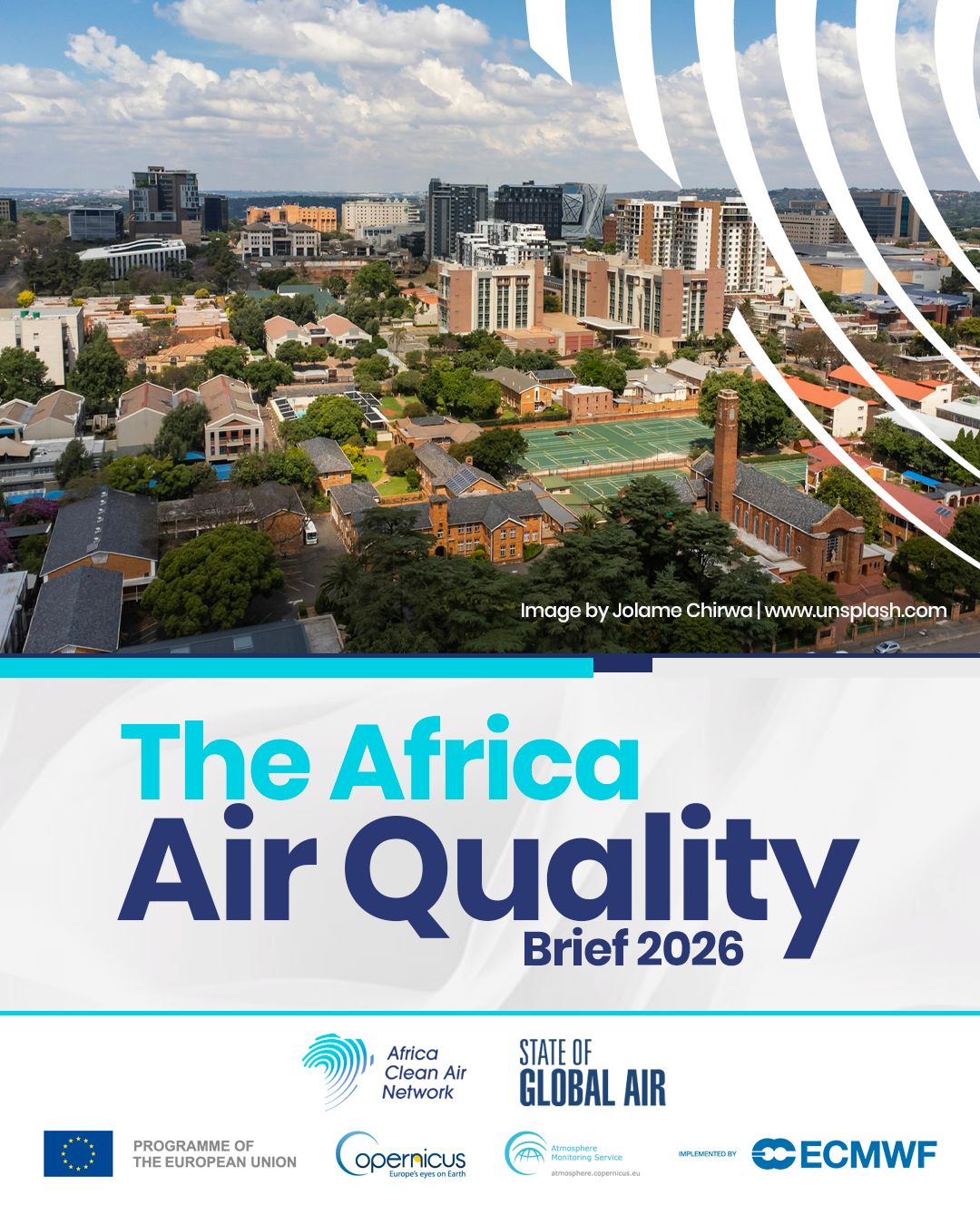
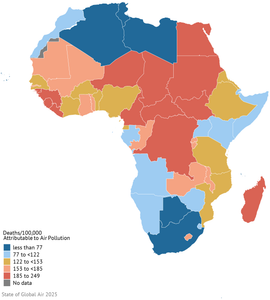
The Africa Clean Air Network has launched a new brief that provides a continental overview of air quality, spotlights areas where progress has been made, and outlines future priorities. Air pollution is the leading environmental risk factor contributing to 1.2 million deaths in 2023, with the largest health impacts in countries including Nigeria, Egypt, and the Democratic Republic of the Congo. The brief, first of its kind, was developed in partnership with the Copernicus Atmosphere Monitoring Service and the State of Global Air.
Noting the importance of data in decision-making, Dr Laurence Rouil, Director of the Copernicus Atmosphere Monitoring Service, said, “Reliable and accessible air quality information is essential for informed decision-making. By combining and interpreting satellite, in-situ observations and model results, this brief provides a clear picture of air pollution patterns and trends across Africa, helping policymakers identify priorities, assess progress, and support actions that protect public health.”
There is also a breadth of knowledge, experience, and expertise on the continent that can help fast-track clean air actions. The brief highlights progress being made across African cities and countries to address air pollution. “In Togo, the government has demonstrated its commitment to improving air quality through the Togo Air Quality Project (PQAT), which aims to monitor air quality in 11 cities using a combination of reference-grade monitors and low-cost sensors.”, said Lantam Djeri-Wake, Coordinator, PQAT. “We have also developed national standards, and consultations are underway with municipalities, various government ministries and public agencies, research institutions, and the private sector to integrate AQ considerations into development initiatives, to foster an ecological transition in consumption and production patterns.”
While air quality actions are underway in many cities and countries, there is a need to bolster efforts to strengthen the investment case for clean air, improve governance and monitoring capacity, increase public engagement, and strengthen mechanisms for cross-border collaboration and knowledge exchange.
Nancy Lozano-Gracia, World Bank Institute for Economic Development, notes that “The brief makes an important case for expanding monitoring and translation of data into local action. As more cities in Africa are setting up air quality monitoring, it is important that we invest in capacity, research and engagement to translate data into policy-relevant evidence, including the economic costs of air pollution and the benefits of clean air action.”
The priorities also align with the African Union’s Agenda 2063 aspirations, which call for inclusive, sustainable development and stronger regional cooperation. Harnessing the momentum can help turn these ambitions into coordinated, bold action across Africa.
The brief has been produced in partnership with the Copernicus Atmosphere Monitoring Service and State of Global Air, and draws on globally consistent datasets on air quality as well as health impacts. This is the first in the series, and the network is happy to work with partners to generate curated datasets for specific countries or regions within Africa. Contact us at network@cleanairafrica.org.
